













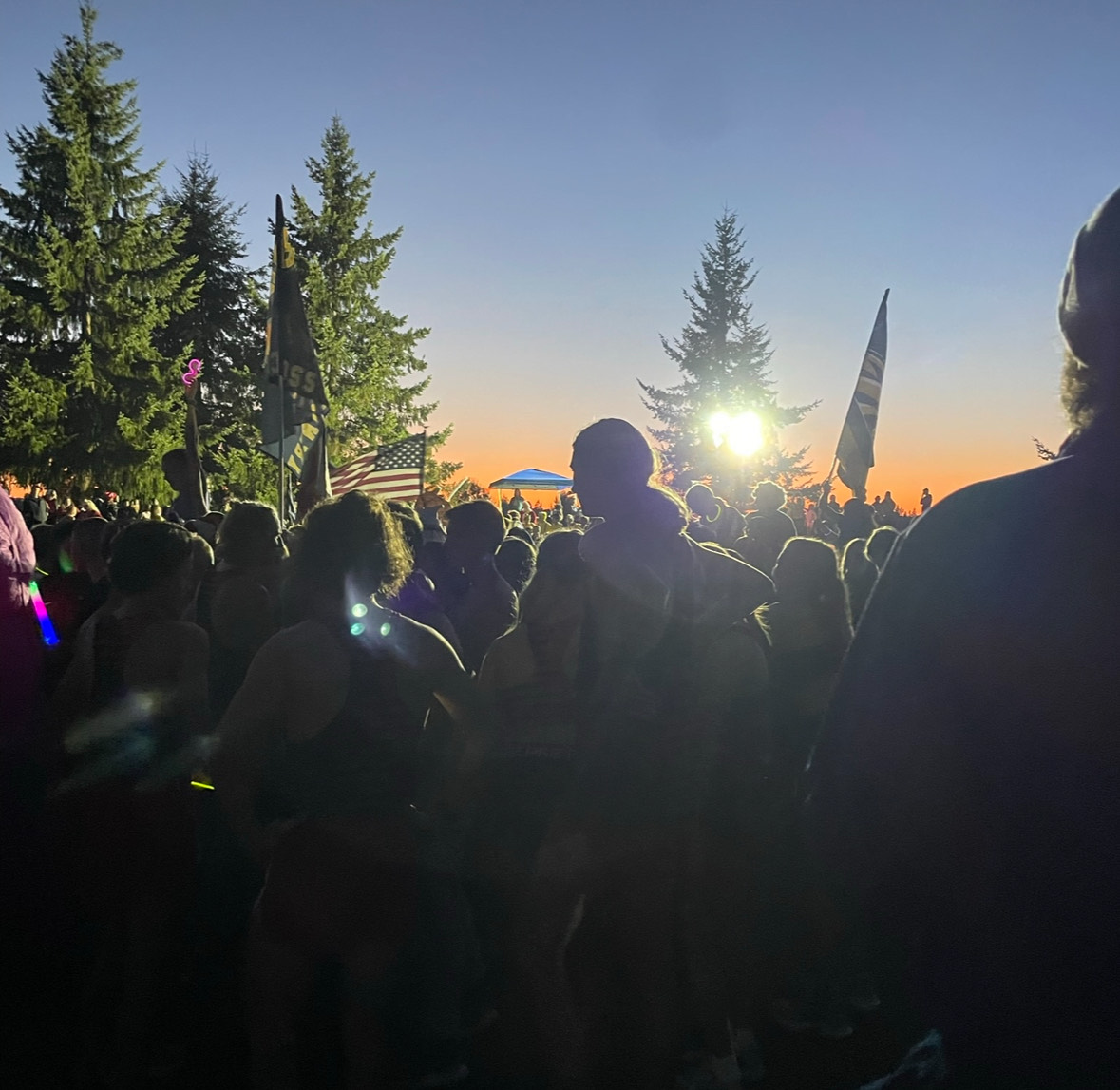

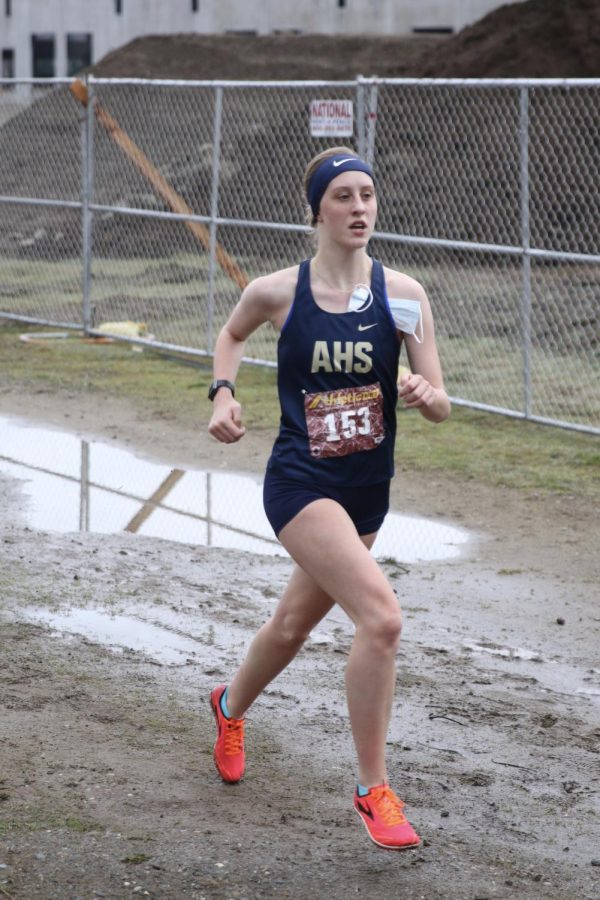








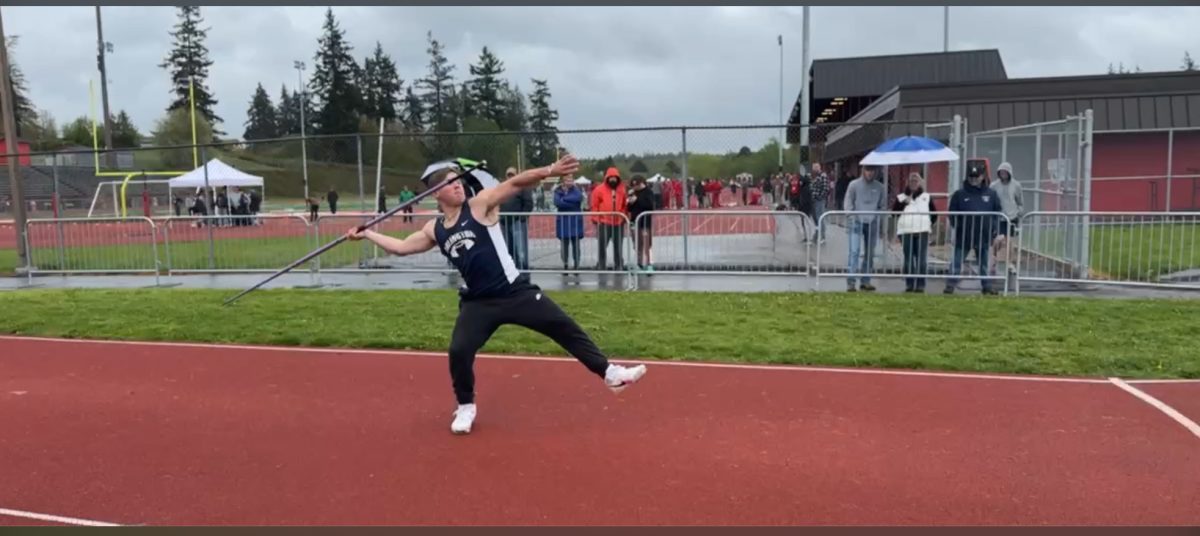
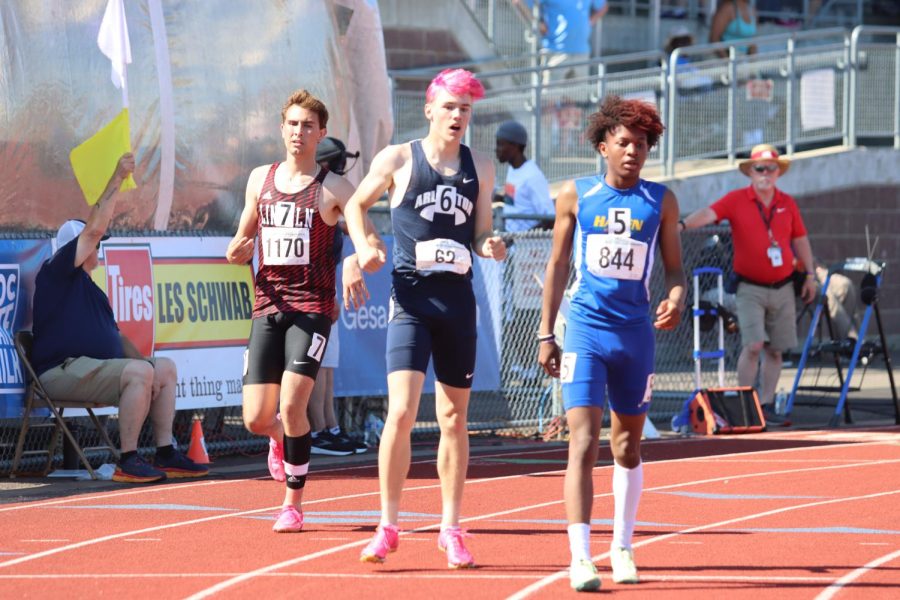











Running for cross country isn’t easy, and that’s no exception to Arlington high school Cross Country and Track athlete Ramon Little. Coming off a long cross country season Little competed at the state level in Pasco, Washington taking first place in the boys ambulatory race. Compared to the previous years getting the third and second spots respectively. But how has Little settled in now that time has passed?
Competing at state is always a big deal for athletes, but winning state is a completely different story. It’s often common to brag about your accomplishments or make excuses about certain conditions, especially going against the 3 time state champ Jacob Hopkins (‘26) from Cascade high school, but that would be far from the truth when talking about Little.
“In kind of like a bad way, I don’t really feel that different… And I’m not trying to be really humble, but a lot of people have told me that I’m just being too humble and I won a state title and I should be gloating more… but for some reason I just don’t feel like that,” Ramon Little (‘27) said. “I don’t want to make everything about what I do and what I did. If they ask about it, I’m open about it and I’ll totally talk about it and stuff. But I don’t want to go around and just say that.”
With the ambulatory and unified races being combined but scored separately, it’s difficult to gauge where your place is in your own race. But that didn’t seem to be a problem for Little’s mindset.
“Sometimes it’s hard for me to know if a person is ambulatory or unified, but I still thought l wanted to beat everyone… In the middle of the race for a little bit, I wasn’t winning, even though I knew I would win for ambulatory… it wasn’t really like the second mile of the race where I was like, oh, I’m actually going to win, and I will be a state champion,” Little said.
For those who don’t know Little, he runs with a running blade which is a J-shaped carbon fiber prosthetic foot designed for amputee athletes according to Ossur Bionics. In the previous two cross-country seasons, Little competed with a regular prosthetic leg, which gave zero energy return leading to a huge amount of running fatigue. Getting a running blade was a huge step forward for Little’s season.
“I had about a month or maybe like less than that, or two or three weeks right before track season… I didn’t have it for that cross country [season] and it just immediately dropped my times a lot. I think the biggest one was my mile, which was, I think, 5:51 my freshman year and then it was five flat that [Sophomore] track season,” Little said. “The biggest difference with it is that it would just give me so much more energy back. Before and when I would plant my leg I would feel like I was just stepping in a hole because it felt like there was nothing there, like a rock solid thing stopping me before.”
While many can understand Little’s position, many don’t recognize how some thoughts can be misunderstood about his running blade. Leading to misconceptions about the legitimacy of his athleticism.
“The biggest misunderstanding is, um, I don’t have an ankle, so I don’t have to worry about that, and that makes like everything easier, which I guess is technically true, but it kind of I feel like it’s replaced with something not how it’s supposed to be, because why wouldn’t we just grow up to have not two legs then?” Little said. “And my running blade, it’s really huge and some people will say it’s like cheating… it’s obviously not cheating because, like it’s not what humans are. They didn’t grow carbon fiber or anything.”
It’s really easy to view someone on how they look on the outside or even off of someone else’s views and opinions. No one can really know how someone carries themselves based on outside views and tendencies. Questions are essential to knowing more about a person, who is Ramon Little and what are his views and goals?
“I guess Ramon Little is willing to tell you the truth and what I actually think about you… I’ll do things I want to do, and if I’m really involved in it, I can be really good,” Little said. “I want to see myself as literally no different than anyone else. Obviously there’s some things I can’t do, but I can do basically everything that you can do. I just want to be on the same level and the same status as everyone else. I don’t want to be like, oh, the kid with one leg and everyone else.”
For Little, that mindset also affects how he wants people to interact with him about questions.
“It’s okay to be curious, I guess, about what you see, but like, think about what you’re asking and how that’s going to affect me before you ask it. I’m used to most of them now because they come back to me a lot… it’s fine, I’ll tell you most of the time when I feel like it”
Instead of letting wins, questions, or appearances define him, Little stays focused on his mindset and how he wants to be seen as a person. His mind shows that his motivation goes deeper than medals, leading into the message he wants others to take from his experiences.
“You’re capable of way more things in that sport, no matter what it is, then you think…that’s how our brain is wired to like keep us safe, and so some of those sports you’re pushing yourself and you’re making your body hurt and your brain doesn’t want to make you do that. But you’re actually way more capable of more things than you think and if you just put your mind to it, then you can do so much more in your sport and just be a lot better,” Little said.