



















































































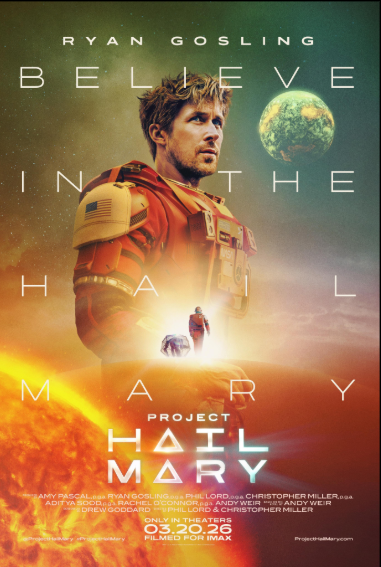
Project Hail Mary released in theaters on March 20, 2026 all over the world, after becoming a hit among critics following its London premiere on March 9, 2026.
The film, based on the book of the same name by Andy Weir, is still currently in theaters, with an extended theatrical run after the success in the box office. As of early May, the film has made over $600 million worldwide from ticket sales alone.
With a runtime of 156 minutes, the story opens up in a middle school science classroom, slowly introducing us to the main hero of the story, Ryland Grace, played by Ryan Gosling. The film then cuts to the present, with Grace waking up with amnesia while on a mission in space to save humanity from an organism known as Astrophage that is quickly eating away at the sun and stars. He had no memory of whether he was going to return home after or not.
The film starts out rather slow, with lots of cuts between the past and present, but becomes more evenly spaced out as the film progresses, documenting the natural progression of Grace’s memory slowly returning. In a turn of events, Grace happens across an alien ship, with only one survivor, which he named Rocky, who had escaped his planet due to the Astrophage.
Shifting away from the story to the technical aspects, let’s talk about the cinematography. Greig Fraser took a unique approach, using visuals of space that none have ever seen before in a film.
Fraser, known for his work on other well-known films such as “Dune”, “Rogue One”, and “The Batman”, used various lighting techniques, vertical shots as opposed to the usual horizontal angle, and an ARRI ALEXA 65 camera – an alternative to IMAX shooting. This achieved the more analog look of the film, without losing the quality needed for high-end theatrical releases.
The film is already headed on a path for success next awards season, being the highest grossing film of the year so far.
Project Hail Mary does a very good job of displaying the emotion and actual view of depression and loneliness that comes with being isolated for years on end. The film explores themes of friendship and hope in a way that most films have yet to attempt, showing how science and technology can break down barriers between not just languages but whole species. Rocky and Grace are prime examples of how community can lead to hope and expansion of ideas.