










































































As the first quarter came to an end and parent teacher conferences took place, anxious refreshes of online grade-books had become a ritual. Grades, originally meant to measure surface-level progress, seemed to have become the goal themselves.
Higher stakes classes often feel more reliant on grades. As teachers, schools and colleges tend to value course heavy subjects more, students commonly feel that core classes carry so much academic weight that the learning itself feels secondary and there is no room left for curiosity.
“I kind of want to say that it really depends on the class. Mostly for your basic classes, so like math and English and sciences, definitely going to be the grade [that is more prioritized],” said Amy Lopez-Gonzalez (‘26).
This prioritizing of scores is felt across the student body. Unfortunately, the heavy focus on the final number encourages shortcuts and surface-level efforts, a pattern that teachers often observe in the classroom.
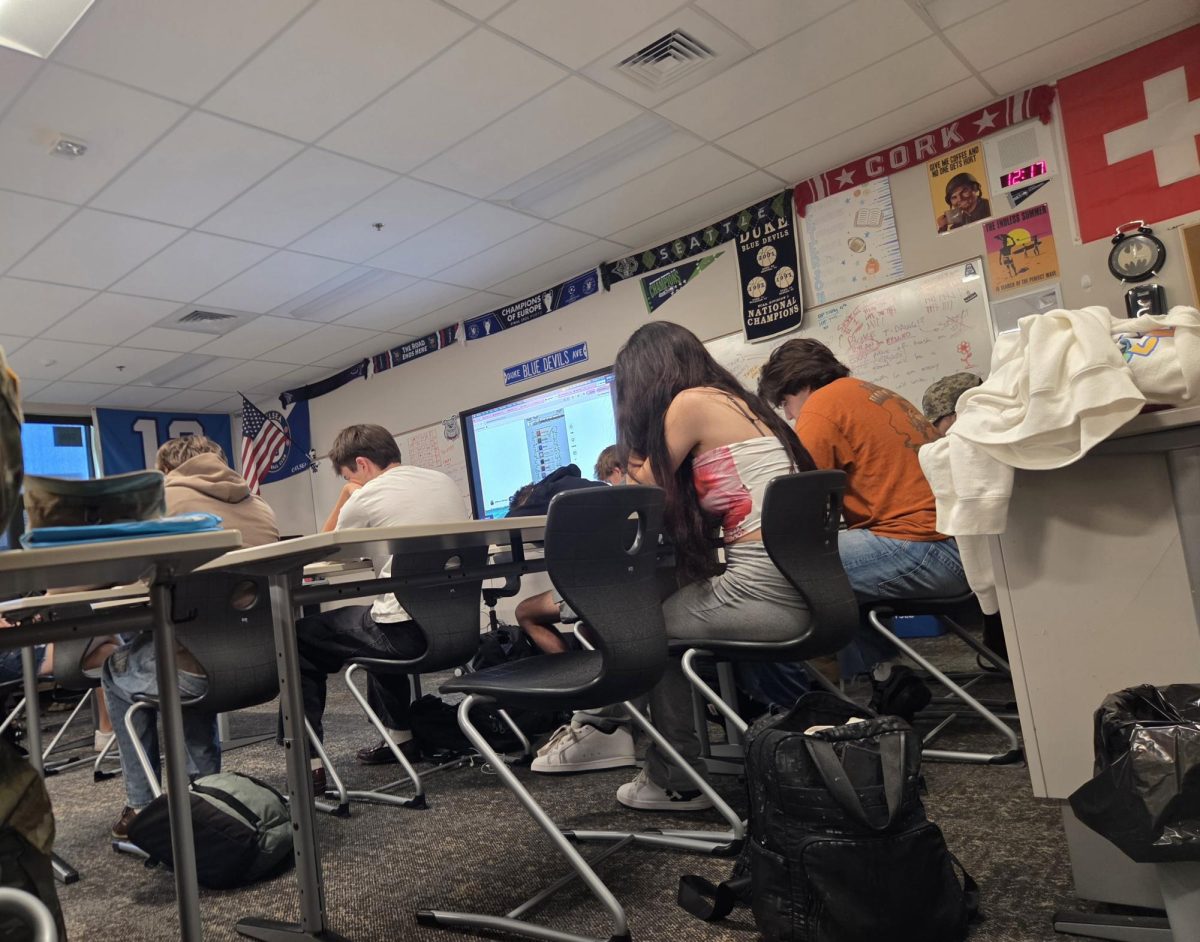
“Cheating is a core part of all this when you’re talking about grades… If they’re cheating, they’re not caring about their learning,” said Jeff Bryson, a history teacher at the high school.
The pressure to achieve high scores also extends beyond classrooms and the immediate assessment. Both students and teachers note that parents’ expectations and the college admissions requirements constantly enforce the mindset that grades equal success.
However, grades often fail to reflect genuine effort and understanding. Despite continuous participation and diligent completion of all homework and classwork, many students still struggle with test scores. This shows that the grade itself can be a poor criteria of engagement and learning.
“I’m one of the main people that actually work through homework and do stuff, and I participate in class… and yet I still get, like, 75%, like almost every test. It’s a little frustrating,” said Gonzalez.
The frustration is only further enhanced by the idea that academic systems reward rule-following over true knowledge. Students also frequently feel that many teachers prioritize basic assignment completion rather than actual comprehension. This focus on getting it done rather than getting it understood is what pushes many students toward surface-level work.
“I think most teachers prioritize completion… And I feel like they should focus on what we’re learning instead of just [students getting] it done,” said Brooke Robbins (‘28).
This race also often leaves students with achievements that do not feel like their own. Some reflect on their previous classes where, according to their scores, they did well but, in reality, they personally “learned little to nothing”. Focusing on building blocks of future topics and strengthening foundations are what benefit students the most and echo throughout their journey.
However, despite current priorities, a lot of teachers hope that someday the focus will shift and the long-term benefits of education and learning will be applauded over the short-term reward of a decent score. The real goal of schooling is to make students lifelong, enthusiastic learners.
Some teachers believe that such a shift to comprehensive learning “has to come from the top”. Students and faculty might not fully enforce the transition or think of it as necessary, unless it is administered by higher officials. The focus on learning is not a simple change of class plans. It comes from within the students and they interact with the environment around them.
Schools will probably never be able to do away with the grading system. However, if the concept of learning was as praised by society as good scores are, maybe instead of hiding bad scores or getting anxious about them, students would consider them routine learning checks while trying to improve for the next test.
“You know, true happiness is when you’re thriving. And I think to thrive, you’re learning and you’re motivated to keep improving,” said Bryson.
